
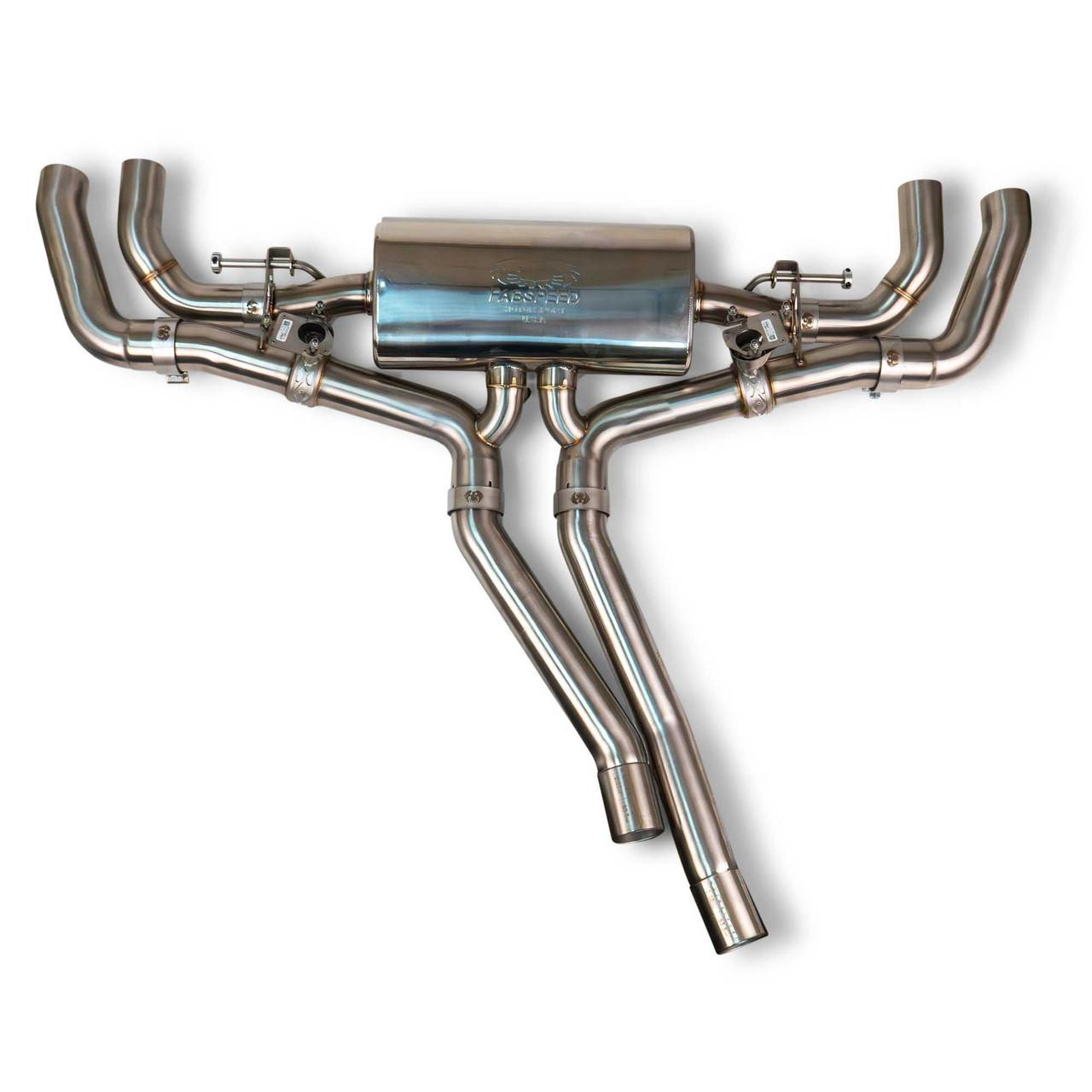
The aftermarket automotive industry holds a major secret that many performance enthusiasts discover only after making a significant financial investment: a massive portion of performance exhaust brands do not actually build their own products. Instead, many modern labels function primarily as design and marketing firms. They create layout blueprints on a computer, outsource the physical fabrication to massive overseas factories, stamp their corporate logo onto the polished metal tips, and direct the rest of their budget into high-production social media campaigns. This creates a massive divide between outsourced "catalog brands" and the elite tier of manufacturers who cut, bend, and weld raw metal under their own roof. Understanding exactly who builds your equipment matters immensely when upgrading high-performance machinery, as outsourcing directly impacts the long-term reliability and physical durability of the components bolted to your vehicle's undercarriage.
The True Cost of Outsourced Quality Control
When a brand outsources manufacturing overseas, critical quality control gets lost in transit. While these catalog systems look polished out of the box, foreign factories rarely prioritize thermal management, leading to high engine bay temperatures that can melt wiring harnesses and damage sensitive electronic sensors. Because these marketing brands do not own the production facilities, fixing design flaws can take months, leaving buyers stuck dealing with ill-fitting components. Whether you are seeking a high-performance Audi aftermarket exhaust to unlock the acoustic potential of a twin-turbo motor or simply trying to maximize throttle response, outsourcing introduces unwanted variables. Without tight factory oversight, small defects like loose interior baffling frequently slip through, creating annoying cabin vibrations and harsh drone that completely ruin the premium driving experience.
The Science of Acoustic Engineering
Furthermore, outsourcing creates an immense gap in specialized acoustic engineering. High-volume overseas factories build components to fit a dimensional blueprint, but they lack the tracking instruments and engineering feedback loops required to tune the sound frequencies of a specific motor. Without rigorous field testing, these systems frequently produce an unbearable interior cabin drone between 2,000 and 3,000 RPM, turning an everyday commute into an exhausting experience. True performance manufacturing requires continuous adjustments to muffler baffling, internal packing materials, and helmholtz resonators—tasks that require an agile, closely managed development floor where designers work directly alongside the fabrication team.
Choosing an outsourced brand frequently means dealing with several common engineering shortcuts:
- Lower-Grade Steel Variations: Mass-production facilities often use cheaper variants of stainless steel that lack the longevity required for high-heat environments.
- Thinner Piping Walls: Reducing the thickness of the metal tubing saves production costs and reduces shipping weight, but it makes the tubes highly prone to fracturing under intense heat cycles.
- Automated Robotic Welds: High-speed assembly robots create rigid, uniform welds that look clean but often fail to achieve the deep structural penetration required to survive track use.
- Lack of Acoustic R&D: Foreign factories build parts to look identical to blueprints, but they do not street-test the systems to eliminate cabin drone or tune the specific acoustic frequencies of the motor.
How Fabspeed Motorsport Approves Every Stage of Production
Operating out of a 26,000-square-foot manufacturing complex in Fort Washington, Fabspeed Motorsport sits firmly in the premium, 100% in-house fabrication camp. They do not merely assemble pre-fabricated components from an overseas shipping container. Instead, their engineers and craftsmen manufacture high-end exhaust systems directly from raw industrial materials. This localized control allows them to inspect the purity of the raw metals arriving at the loading dock, verifying that no inferior alloys make it onto the production floor. By managing every cut and seam locally, they maintain an agile development process that can adapt to minor engineering updates instantly.
Accountability on the Shop Floor
Having the entire production staff under one roof also fosters a culture of accountability that is entirely absent in outsourced supply chains. If a fabricator notices a variance in a laser-cut flange, the issue is resolved immediately on the shop floor rather than being packaged, shipped, and left for the consumer to discover during installation. This level of oversight guarantees that every bracket, oxygen sensor bung, and exhaust hanger aligns perfectly with the factory mounting points on the vehicle, eliminating the need for installation shops to force, bend, or modify components to achieve a proper fit.
To maintain total control over structural integrity and power gains, the production floor utilizes specialized machinery and handcrafted techniques:
- Aerospace-Grade Raw Materials: Fabricators source premium, aircraft-grade T304L stainless steel, titanium, and carbon fiber. The "L" stands for low carbon, which makes the metal incredibly resistant to the severe corrosion and brittle cracking caused by high-exhaust temperatures.
- Heavy CNC Mandrel Benders: Instead of purchasing pre-bent pipe sections from third-party suppliers, the shop utilizes an all-electric CNC mandrel bender—the same precision technology used by aerospace manufacturers to bend heavy-gauge fuel lines. This keeps the pipe diameter perfectly uniform throughout the bend, completely eliminating restrictive bottlenecks.
- Handcrafted Artisan TIG Welding: While budget brands rely on automated assembly lines, every system here is hand-jigged and TIG-welded by specialized American craftsmen. Because human hands control the heat application, the welds achieve complete penetration into the metal joints, creating the distinct, highly durable "stack of dimes" pattern.
- Real-World Dynamometer Testing: Because the entire process happens locally, the engineering team designs a prototype, immediately bolts it onto a vehicle in the development bay, and runs it on an in-house chassis dyno to measure real wheel-horsepower and torque improvements.
Matching Engineering Quality to High-End Platforms
When upgrading an exotic vehicle, installing a mass-produced, outsourced exhaust system can hurt the resale value and the overall performance of the car. Sophisticated powerplants require precise backpressure metrics and specific thermal management properties that simple private-label parts cannot provide. When an exhaust system is engineered without real-world vehicle testing, it can trigger persistent check-engine lights due to incorrect catalytic converter flow rates, forcing owners into repetitive trips to the mechanic.
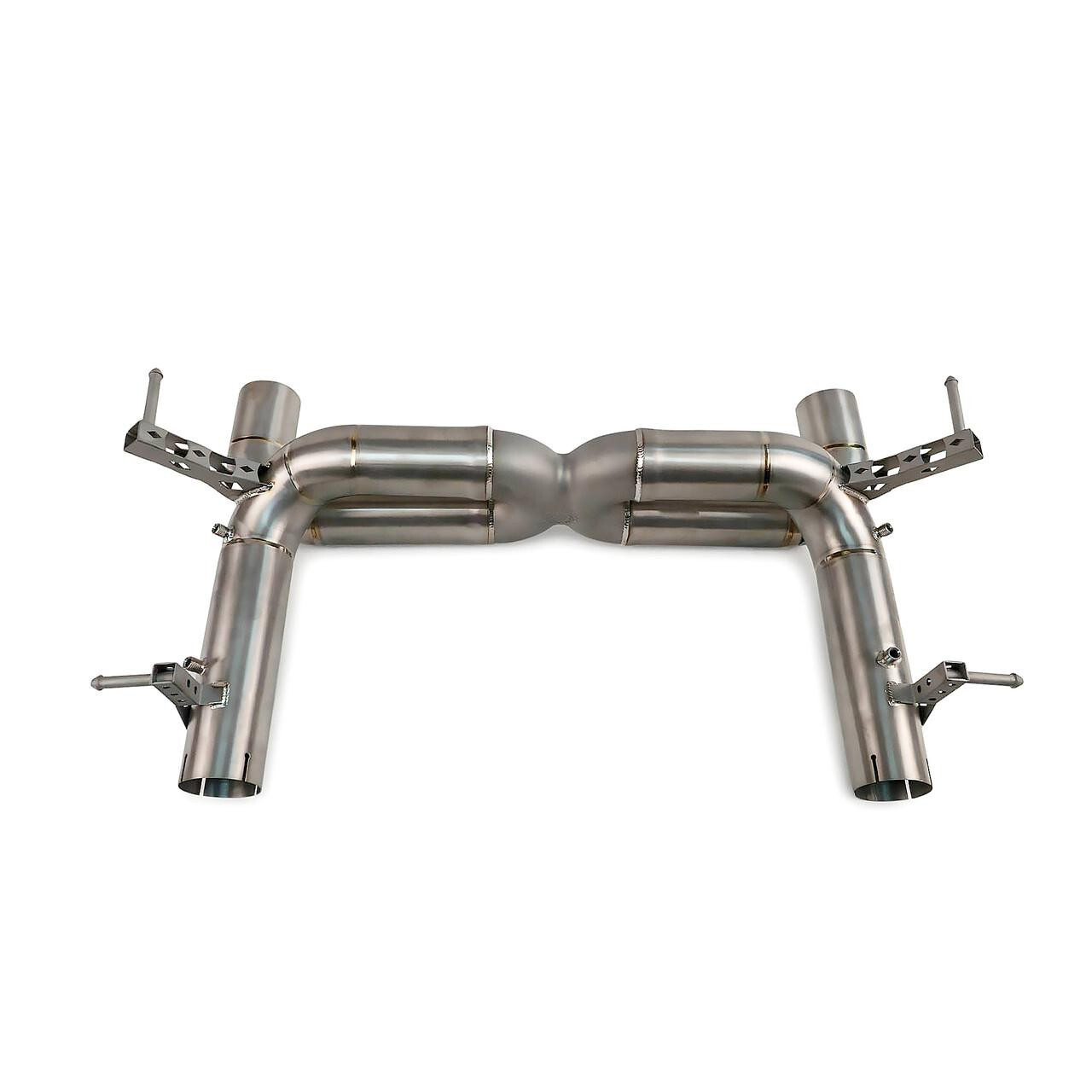
For owners configuring a specialized Ferrari aftermarket exhaust to capture that historic, high-pitched Formula 1 wail, generic engineering simply will not suffice. Replicating those distinct acoustic notes requires precise internal x-pipe configurations and exact gas velocity calculations that can only be perfected through dedicated, localized engineering.
Advanced Integration with Modern Supercars
High-end European sports cars utilize advanced valvetronic exhaust systems that tie into factory driving modes. Outsourced brands often use cheap vacuum valves that fail under track heat, leading to electronic dashboard errors. In-house engineering integrates premium, heavy-duty valve mechanisms that respond precisely to the car's computer.
Controlling the fabrication process from raw steel to polished tips allows Fabspeed Motorsport to stand behind its structural carpentry. Investing in a true manufacturer avoids the common pitfalls of cracked welds, poor fitment, and generic drone.
By keeping everything under one roof, Fabspeed Motorsport preserves the exact engineering standards demanded by supercar owners worldwide. This attention to detail delivers optimal performance improvements without sacrificing everyday drivability. To learn more about how artisan fabrication can transform your exotic vehicle, contact us today.