
 Canada
 Euro
Euro
 Australia
 Pound
Pound
 Peso
Peso
 Singapore
 Bahraini Dinar
 Malaysian Ringgit
 Qatar
Qatar
 Russian Ruble

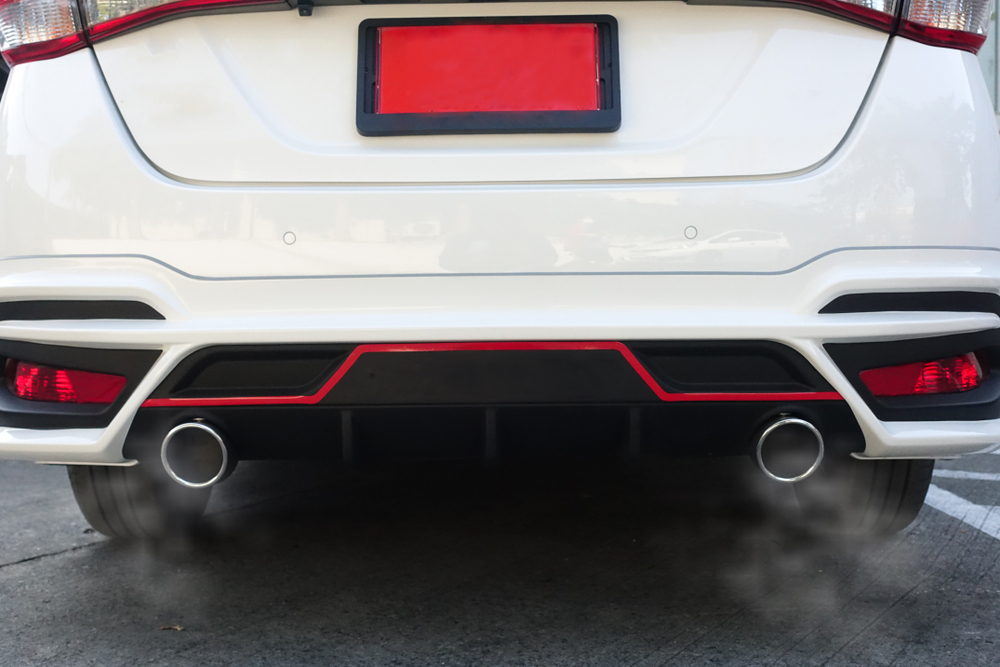
We have all been there. You are scrolling through car parts online and dreaming of that perfect engine growl. Then you see it: a "performance" exhaust for a few hundred bucks. Right next to it is a professional system from a name like Fabspeed Motorsport at a significantly higher price. At first glance, they both look like shiny metal tubes. So, what gives?
The truth is that the "hidden" stuff makes the difference between a car that sounds like a supercar and a car that sounds like a broken lawnmower. Here is what you are not seeing when you look at those price tags.
The "Tin Can" Trap: T409 vs. T304L
The biggest secret in the exhaust world is the metal itself. Cheap systems are often made of lower grade stainless steel (T409) that is "stainless" in name only. This metal contains a lot of iron. This means it will eventually oxidize. After one salty winter or a few months of high heat driving, that budget pipe can start to develop "rust bubbles," pitting, or even small cracks.
A premium Fabspeed system uses a much higher grade of metal known as T304L. It is the kind of steel used in high end medical tools and commercial kitchens. It handles the extreme heat of a sports car without getting brittle or changing its molecular structure. It does not just look better. It is a part that is meant to last as long as the car does, regardless of the weather or how hard you track it.
The "Pinched Straw" Problem: Why Bends Matter
If you have ever tried to drink a thick milkshake through a straw with a kink in it, you know how hard it is to get anything out. Cheap exhausts are often made using "crush bending." It is fast and cheap, but it crinkles the pipe at every corner. This pinches the airway shut. This creates "backpressure," which actually fights against your engine. It can even steal horsepower rather than adding it.
High end systems use "mandrel bending." This uses a flexible rod inside the pipe during the bending process to keep the walls perfectly round and wide, even through the tightest turns. Whether you are installing a Porsche GT3 exhaust system or a simple mid-pipe, this smooth and consistent path is the only way to actually gain horsepower. If the air cannot get out smoothly and quickly, the engine simply cannot breathe and your car cannot go faster.
The Science of the "Screamer": Acoustic Tuning
Anyone can make a car loud, but making a car sound expensive is an art. Cheap exhausts usually have a "drone." This is that annoying and vibrating hum that fills the cabin when you are just trying to cruise on the highway. It is the kind of noise that makes your passengers complain, vibrates your rearview mirror, and gives you a headache after twenty minutes of driving.
Premium systems are "tuned" like a musical instrument. Engineers spend hundreds of hours testing how sound waves bounce around inside the pipes to cancel out those "bad" vibrating frequencies while keeping the "good" ones. This is often done through X-pipe geometry. This merges the exhaust pulses from both sides of the engine to create a higher pitched and exotic sound. For example, an Audi R8 exhaust system is engineered to scream like an exotic race car when you are on the gas but stay totally civilized and quiet when you are just driving to the grocery store.
Hidden Quality: The Art of the Weld
If you look at the joints of a cheap exhaust, the welds often look like messy piles of toothpaste or "bird droppings." These are major weak spots. High performance engines vibrate a lot, and those messy welds are prone to popping open or leaking under pressure.
The team at Fabspeed uses a much slower and more precise welding style (TIG welding) done by hand by master craftsmen. They also use a process called "back purging." This fills the inside of the pipe with an inert gas while welding. This prevents a rough metal "crust" (called sugaring) from forming inside the pipe where you cannot see it. This hidden crust would otherwise slow down the air and create turbulence. The result of this extra effort is a joint that is actually stronger than the pipe itself and as smooth as glass on the inside.
The "Perfect Fit" Promise and Hardware
There is nothing more frustrating than getting a new part and realizing it does not quite fit. Cheap exhausts are often "universal." This requires you to bend hangers with a pry bar, cut pipes, or use "adapters" just to get them to stay on. This often leads to the exhaust rattling against the frame. Even worse, it can lead to melting nearby plastic bumper parts because the tips are not centered.
A premium system is built on a "jig." This is a 100 percent accurate metal mold of your specific car's underside. It is designed to bolt on exactly like the factory part did with no "massaging" required. Furthermore, the hardware included (the clamps, gaskets, and bolts) is of a higher caliber. Cheap systems use zinc plated hardware that seizes up and rusts almost instantly. Premium kits provide heavy duty clamps and stainless bolts that will not snap the next time you need to take the exhaust off for maintenance.
Performance: Proven on the Dyno
Budget manufacturers often make "blanket claims" about power gains. However, they rarely back them up with data for every specific car. They might use the same generic muffler for a small 4-cylinder as they do for a large V8. This "one size fits all" approach ignores the physics of how engines actually work.
A professional manufacturer like Fabspeed tests every single design on a dynamometer (dyno) to prove that it actually makes power. They understand that every engine has a specific "scavenging" requirement. This is the process where the outgoing exhaust air actually helps pull the next fresh air charge into the engine. If the pipe is too big, the air slows down and you lose torque. If it is too small, you lose top end speed. A premium system is sized perfectly to make certain you get a broader and more usable power band across the entire RPM range.
The Verdict: Quality Over Cost
A cheap exhaust is a cosmetic choice. It makes the car loud and might look okay for a few months. A premium Fabspeed system is a performance investment. You are paying for a part that fits the first time, adds real power you can feel, and produces a sound that turns heads for the right reasons.
When you consider the cost of potentially having to replace a cheap rusted system, or the labor costs of a mechanic struggling to fit a "universal" pipe, the premium option often ends up being the better deal in the long run. In the car world, you really do get what you pay for. It is better to "buy once and cry once" than to keep paying to fix a cheap mistake that makes you hate driving your car. Your car deserves a sound that matches its soul and engineering that will stand the test of time.
If you are ready to transform your driving experience and hear what your engine is truly capable of, reach out and contact us today. Because when it comes to your car, compromise is always more expensive in the long run.